Sunday, September 28, 2008

visionOntv Mission Statement Draft 16

Tune in to visionOntv and join people who are making the world a better place!

What we do
visionOntv broadcasts video for social change and for saving the planet. visionOntv is a lean-in, lean-out experience. We give you the option to interact and find out more about the content, or to lean back and watch it like normal TV. Around all our programmes, we will enable people to link up directly for grassroots campaigning and direct action, but also for all the other forms of social networking. For us most importantly visionOntv is an outreach project and we aim to make social change via video a real possibility.

Outreach
visionOntv aims to inform, engage and inspire the wider public. In practice this means we will broadcast content with the widest possible definition of “alternative”. We believe that social change takes many different forms, and we aim to be a portal to them all.

Quality
visionOntv puts the viewer first. We are not an open publishing project and we have a quality threshold for all films featured. We provide training and tools for less experienced producers to enable their work to have maximum impact.

Ease of use

Our aim is to make viewing visionOntv as easy as watching traditional TV. The whole range of options for knowledgable people will be there, but never in a way that confuses the first-time viewer.

The tools we use
visionOntv strongly favours the use of open source tools for video production and distribution. There is an on-going battle for the soul of the worldwide web, between client / server relationships (what people need they have to get from a corporation) and ‘people to people’ relationships (people freely sharing skills and knowledge with each other). The internet is fundamentally based on peer-to-peer relationships, which we strongly defend.

We will not approach this dogmatically, however. At a given time we need the best tools available. For outreach to be successful, the tools need to be reliable and simple to use. We will help to develop these tools where they do not exist, but sometimes the best ones will be corporate and closed source.

Creative commons and media democracy
Digital information is innately free, but some corporations want to restrict that freedom. We defend that freedom via creative commons distribution, which makes up the majority of our content. This means that anyone can re-edit and re-distribute the films, or even the whole project itself, under a non-commercial creative commons licence. We also promote a view of media democracy which breaks down the social divide between those with broadband and those without. Viewers receive high-resolution copies of films downloaded into their computer. These copies can be independently distributed or projected in a cinema, festival or community hall. In this way a single broadband connection can serve a whole community.

We see visionOntv as one of many interconnected alternative media projects around the world.

Sustainability
visionOntv has substantial costs for its maintenance. We will work hard to be sustainable by generating income, to give project workers and content producers funding into the future.

We include only ethical advertising on the core visionOntv project - non-aspirational info-verts from ethical companies.

It is our aim, from monies raised beyond the running costs of visionOntv, to create a production fund, where producers of already-featured content can easily (and non-bureacratically) apply for production grants.

Log on to http://visionOn.tv and tell us what you think.

Tuesday, September 23, 2008

Good video on how/why to opensource


How to Start an Open Source Project from Phil Whitehouse

OUTLINE for ad-engine useing LIFERAY


The basic programming for this is VERY simple – the key thing is the user experience and the content that the TV station is putting out to carry the advertisements.

We build it using the existing liferay CMS, most of the functionality is already there. The initial version is built up inside the VOTV project as this provided a ethical “walled garden” with out closing the finished system to larger markets.

For good info on the API and social networking side of CMS http://www.ustream.tv/recorded/394991

WORKING BETA

Stage one – basic free advertising

Simple liferay webform that creates a HTML webpage.

- picture

- title

- 2 lines txt

- link

A tag chooser – via tag cloud or user created

This then is rendered by an existing webpage thumbnail code into a JPG (or PNG) <>

We create an API to make the jpg available in combination with the tags to our playlist generator.

*** The separately developed play list generator deals with ad placement/tag video matching ***

Stage two – basic pay advertising

Paypal payment gateway for tags – try use existing liferay shopping cart to do this as all the secure payment is built already. Cost of tags are based on demand – every time someone buys one its price goes up, the price is reduced with lack of buying/time.

Need to write the code to make this happen.

Finish API to talk to VOTV player and embed media player.

We implement a simple quota of plays for an ad in a time piread – by default if no ad is available a channel promo – insert is played so the isn’t a problem of empty ad space on the channel – we don’t have to make money for the first year, though it would be nice to.

Use Google analytics to get user stats.

Stage three – basic geo-location

Use the google location API to allow the purchase of geo-tags, which are simply tags that name regions/cities. This is built into liferay.

Geo-tags reduce the cost of subject tags as they restrict advertising to that geo-region – thus this opens up again the availability of “free tags”.

Build user moderation which is more complex, but agen this is largely built into liferay CMS.

LAUNCH

Open up system to use on blogs and other video projects. Make it available either GPL or creative commons

Start work on VERSION 2

This version starts to address the language and techniques of old-fashioned advertisements and is launched as an open source advertising application – if we use creative commons –non commercial then we can licence it for CASH to commercial companies while allowing free non-commercial/small-scale use and open source development.

MODERATION - Our ad network – info-verts?

For the first 3-6 months all advert providers are checked by our core team. After this we have open adversting to small selected groups and trusted advertising to the main VOTV audience.

After this user moderation kicks in:

For moderation of the ethical advertisement we use - a user group - which agrees to a anything goes policy on ads – they can then moderate adverts through to the larger main user group. Have to be over 18 and sign a contract similar to a porn site – as it will be open publishing so likely to receive porn. This subgroup will get ads from people/organisations that have not been allowed through to the main ad space. Their job is to flag down inappropriate ads and flag up ethical ads. Say 3 flags and you are out/through.

Moderation levels

1) Small group of Ad moderators (open publishing)

2) small-medium over 18 (almost all ads will be ethical)

3) Ad mainstream (all will be trusted ethical)

Advertisers

1) New customers – go to our volunteer moderators who can pass it through to

2) Trial customers - go to our over 18 customers who can flag for core team.

3) Trusted customers –go to everyone, core team moderated.

All our content has a report option on it – flag. If this is clicked a set amount of times by trusted people then it will be brought to the attention of one of our paid admins.

Ad buyers can have their account suspended or removed if they abuse the system – this is decided by core team.

Would you buy an info-vert?

You use the system to get announcements out to people who are likely to be interested in the subjects you are announcing about.

Sell something

Promote an event

Raise awareness

Public education

Get new members for a club or society

Sell your organic vegetables

Local jumble sale

Build a brand

These announcements will be geo-located and matched with subject connected video and stories – via the tags on the content they are next to.

Tags are priced depending on demand (we could start at free or $1 - needs thinking about) there are a number of ways we can do this. Current thinking is that prices will rise every time some one buys them and decay with time if nobody buys.

To encourage buying of multiple tags – all cheaper tags ½ price after first tag.

Users pay by paypal via web interface – the whole ad-serving system is automatic – only moderation is human-mediated.

How it works

Embedded in our VOTV player

Added to our flash embedded player

Running as a javascript banner widget on participating blogs

There is a simple web interface that sells tags for a price depending on demand for that tag. Users can buy any number of tags – area tags will geo-locate the advert. They can then plus (+) or (-) them to mean this is selected or deselected that area or subject.

The info-vert is made up of:

Still image 640x 480 PNG or JPG

Title and body txt (15-20 words)

An active web link

For the video this is rendered into a 640x480 image and played for 3-4 sec in-between videos using the play list generator. For blogs the image is re-sized to 160x120 or so and placed in the side bar of the article.

Subjects on my talk about list

Budget – $6000 for ad engine and CMS

Advertising - ethical

CMS – liferay.com

We have 1.2 million views on youtube 200K a month

100K on vuze

More than 300K on blip.tv

This is without launching the project as it has taken more than a year to do the fundraising.

After launch within a year:

Get over 10 million streams on youtube

And over 1 million full rez downloads on blip/torrent

Why so many boxes?


The PC-to-TV connection. One approach is to directly connect the PC to the living room TV. In support of this, the PC must have a new 10-foot UI. Many software companies now offer this, including the Microsoft Media Center UI. A 10-foot UI is controlled from an IR remote, as there is little desire to use a mouse and keyboard when switching TV channels or accessing entertainment content – movies, music and the like.

http://www.iapplianceweb.com/story/OEG20060214AMDExtendedPCInsight.htm


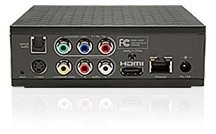
Why so many boxes? The answer lies in an Internet video broadcaster’s requirement for a box to support a “please use my portal!” strategy. With few exceptions, notably the D-Link DSM-520, these boxes do not support open Internet video browsing. Rather, they are the hardware underpinning for a “walled garden” approach, one that delivers video from the broadcaster’s video library to the TV watcher. The fact that all prior Internet-STB projects with similar business models have failed does not deter repeated optimism for releasing new hardware.

Home users in the US have shown significant reluctance to purchase of any new STB – even the easy-to-use Apple TV. The idea that a user may require one STB per Internet broadcaster seems less than practical. But the business models on trial are driven by a common ambition to be a dominant video supplier or ‘video aggregator’ with a single STB that everyone uses; to be sure, a bit like Apple’s hope that the Apple TV would be the “DVD player for the Internet age”.

http://active-tv.blogspot.com/

Wednesday, September 10, 2008

Activists disrupt Coal Authority AGM

Activists disrupt the Coal Authority AGM in Cardiff. Plans included a new generation of coal-fired power stations, and ongoing expansion of opencast mining across UK. More on http://www.visionOn.tv

Sunday, August 31, 2008

some good posts

Interesting articles about tec and law
http://techdirt.com/articles/20080819/1139092031.shtml

Green marketing
http://blog.futurelab.net/2006/08/ecomagination_etc_green_market.html

Who cares about the echo chamber? Who cares if they like your product or not? What every startup should be thinking about above all else is their market. How are you going to make money? Where is that money going to come from? And do everything in your power to make your product, your marketing communications, your brand, everything about your company, about one thing: Appealing to and serving the market that is going to make you profitable.
http://mashable.com/2008/08/26/insights-into-the-marketability-of-tech-companies/

VOTV WEBSITE - We need:

We are using http://www.liferay.com CMS to build the interactive part of the VOTV project.

User pages

The user has the option to add RSS feeds of there existing social networks/blogs, publish storeys direct (blog) and access/display content/interactions on forums over the sight. The is a “wall” that we might use and a list of all interactions on the CMS that we should def use.

Show template pages

- main page

- forum

- chat

- news page – RSS mash up

- contact

(wiki)

* embedded blip show player

* RSS mash up of channel content

* search

* presence

Channel page

- main page

- calendar

- forum

- chat

- news page

- contact

(wiki)

(shop)

* embedded blip tag show player

* RSS mash up of channel content

* search

* presence

TV station page

- main page

- calendar

- forum

- chat

- shop

- resources, RSS etc

- contact

- documents and photos library

(wiki)

* embedded show player

* RSS mash up of station content

* search

* presence

Help pages

- forum

- chat

- sight map

- FAQ

(wiki)

Problem websites - Climate Camp


Looking at our logs for VOTV at the climate camp it seams we got almost no traffic from the climate camp website and UK IMC.

Around 5% of traffic came from http://www.climatecamp.org.uk
Only smaller/occasional traffic from IMC http://indymedia.org.uk

Seams strange as the content was very good and have good traffic from other websites?

Saturday, August 30, 2008

Thinking beyhind VOTV - to see why we are doing what we are doing.

Like our George and Uri book review show – these are both right! we ride the space in between these too points of view.

———————————————————

Is LG15: The Resistance a Web Show or a TV Show?

Web video is starting to mirror traditional TV, like it or not.

http://newteevee.com/2008/08/30/is-%E2%80%9Clg15-the-resistance%E2%80%9D-a-web-show-or-a-tv-show/

———————————————-

At the 2007 EG conference, Kevin Kelly shares a fun stat: The World Wide Web, as we know it, is only 5,000 days old. Now, Kelly asks, how can we predict what’s coming in the next 5,000 days?

Kevin Kelly has been publisher of the Whole Earth Review, exec editor at WIRED, founder of visionary nonprofits, and writer on biology and business and “cool tools.”

http://www.ted.com/index.php/talks/kevin_kelly_on_the_next_5_000_days_of_the_web.html

Friday, August 29, 2008

The world's smallest campaigners strike

One inch high activists have shut down Kingsnorth coal-fired power station. The drama unfolded at E.ON's replica of the plant at Legoland (sponsored by E.ON) while people at Climate Camp protest the planned new coal plant at Kingsnorth. Lego police were in attendance, along with a Lego police helicopter - but neither the campaigners nor the police would comment...